Why Most Baccarat Losses Start Before the First Card
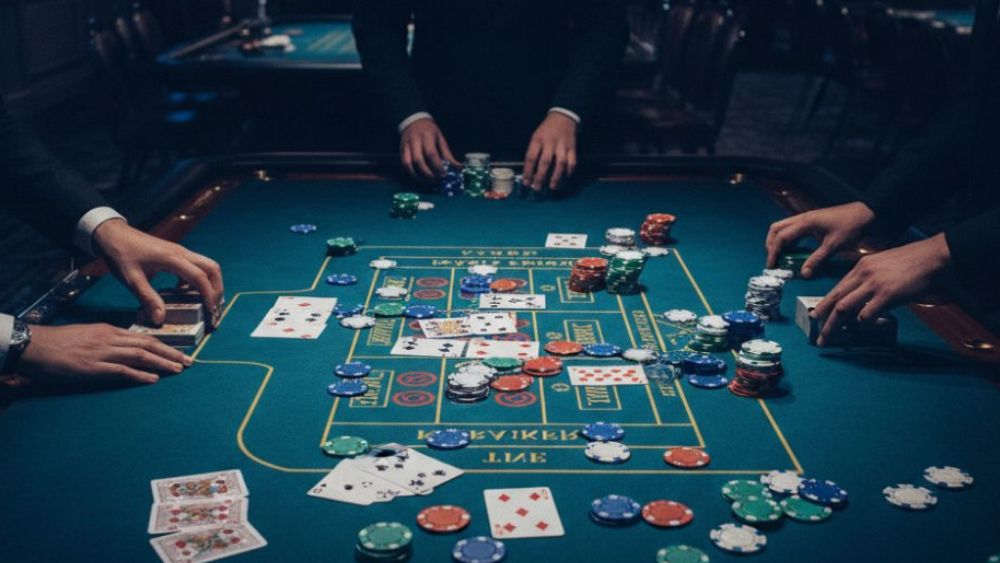
Walk into any casino floor in Entertainment City on a Friday night and you will see the same scene at the baccarat tables. Players crowded three deep, chips stacked in messy towers, and a palpable tension every time the dealer peels a card. Baccarat is the biggest game in Philippine casinos by volume, and it is not close. Solaire, Okada, City of Dreams, Newport World Resorts, even the smaller PAGCOR-operated rooms in provincial hubs — baccarat tables carry the room.
Here is the uncomfortable part. The game itself is close to unbeatable in the long run. The house edge on a standard eight-deck shoe is roughly 1.06 percent on Banker and 1.24 percent on Player, before commission. Those are among the best odds you will find on any casino table, better than most blackjack variants and far better than any slot machine. So why do so many Filipino players still lose heavily?
Because the money does not disappear at the card shoe. It disappears at the decision points — the moments where players abandon basic math in favour of a feeling. This guide is about those moments. Not a magic system, not a pattern you can memorise off a YouTube video, just the specific mistakes that quietly drain bankrolls night after night.
Mistake 1: Treating Banker and Player as Two Sides of a Coin
New players often assume Banker and Player are symmetrical bets, like red and black on roulette. They are not, and the difference matters more than beginners realise.
The Banker bet wins slightly more often — around 45.86 percent of resolved hands versus 44.62 percent for Player, with Ties taking the remainder. That is why casinos charge a 5 percent commission on Banker wins. The commission is not a penalty designed to trick you. It is the mechanism that makes the Banker bet's effective house edge (about 1.06 percent) lower than the Player bet's (about 1.24 percent).
What this means in practice
- Betting Banker flat, every hand, is mathematically the least bad option at the table.
- Betting Player flat is only marginally worse, and it is more fun because there is no commission paperwork.
- Switching randomly between the two does not improve your odds. It just adds noise.
If you cannot explain why you switched from Player to Banker mid-shoe, you did not have a reason. You had an itch.
The players who consistently bleed money are usually the ones who treat the two bets as interchangeable and let emotion decide each hand.
Mistake 2: Chasing the Streak Until It Breaks You
This is the single most expensive habit in Philippine baccarat rooms: the belief that a long Banker run is a signal to press harder.
Streaks feel meaningful. Six Bankers in a row feels like a pattern. It is not. Each hand is an independent event, and the shoe has no memory. The probability of the next hand being Banker is the same whether the last five were Banker or the last five were Player.
What streaks actually do is create emotional momentum. Players start small, then double after three Bankers, then triple after five, then put a serious chunk down on the seventh — right before the run breaks. The math did not change. The bet size did, and that is what hurt them.
A saner approach to streaks
- Decide your flat bet unit before you sit down, and mostly stick to it.
- If you want to press, cap the press at one extra unit, not a doubling sequence.
- Never increase your bet to "recover" a loss on the previous hand.
Writing down streaks on the scorecard is fine. It is a record. It is not a forecast, and treating it like one is how a P5,000 session turns into a P25,000 one.
Mistake 3: Playing the Tie Bet Because It Looks Cheap
The Tie bet pays 8-to-1 or 9-to-1 depending on the table, and it is the most tempting bad bet on the floor. A hundred pesos on Tie feels harmless. It is not harmless over hundreds of hands.
The house edge on Tie sits somewhere around 14 percent in a standard eight-deck game. Compare that to 1.06 percent on Banker and the gap is not subtle. Tie is roughly thirteen times more expensive per peso wagered than the best bet available to you.
You will see players at local tables hit a Tie and immediately start betting it every hand for the next twenty minutes. That is exactly how the bet survives. It hits just often enough to feel possible, and rarely enough to be a consistent loser.
The occasional exception
Some players treat Tie as pure entertainment, like buying a lottery ticket on the side. If you are going to do that, budget it separately and small. Do not fold it into your main strategy. Do not increase your Tie bet after a loss. And never let a Tie payout convince you the bet is due.
If you want to understand how much Tie actually costs you, track it for one month. Write down every Tie wager and its result. Most players who do this stop betting Tie within two weeks.
Mistake 4: Ignoring the Commission and the Table Minimum
Two small operational details quietly wreck more sessions than most players admit.
The commission
On a P500 Banker win, the 5 percent commission is P25. That feels trivial. Over a two-hour session with 60 hands, betting Banker every time and winning half of them, you are paying roughly P750 in commission alone. That is your actual cost of playing, and it does not appear on the scorecard unless you track it.
Some Philippine tables offer commission-free baccarat, usually by paying Banker at even money unless it wins with a six, in which case it pays half. The house edge on those variants is higher than standard commission baccarat. Read the table rules before you assume "no commission" means "better for you."
The table minimum
Baccarat minimums in Metro Manila range from a few hundred pesos at the lower-tier tables to several thousand at the VIP rooms. The common mistake is sitting at a table where the minimum is too large relative to your bankroll.
A rough rule: your session bankroll should cover at least 30 to 40 flat bets at the table minimum. If the minimum is P1,000 and you brought P10,000, you are ten bets deep. One cold streak ends your night. That is not bad luck, that is a bankroll that was never sized for the table.
Mistake 5: Believing in Betting Systems Sold Online
Search "baccarat strategy" on any platform and you will find a wall of systems: the Martingale, the Fibonacci, the 1-3-2-6, the Parlay, the D'Alembert, and dozens of variations with Filipino-sounding names attached to them.
None of them change the house edge. All of them change your variance. That is the whole story.
Martingale, which doubles your bet after every loss, is the most popular and the most dangerous. It works beautifully until it does not, and when it fails, it fails catastrophically. A run of eight losses starting from a P100 bet requires a P25,600 wager just to recover. On a table with a P50,000 maximum, you are capped out and the recovery is dead.
What systems actually do
- They make short winning sessions feel predictable.
- They make rare losing sessions ruinous.
- They sell courses, ebooks, and Telegram groups.
If a system claims to beat baccarat consistently, the seller is either lying or has not played enough hands to find out. Either way, your money is better off staying in your pocket.
What Actually Works: Discipline Over Systems
The honest truth about baccarat strategy is that the strategic part is small and the discipline part is large. There is no bet selection that overcomes the house edge. What you can control is how much the edge costs you and how long you last.
The practical checklist
- Set a session budget before you leave home, in cash, and leave the cards at home.
- Decide a flat bet unit that lets you survive 30 to 40 bets minimum.
- Stick to Banker or Player. Skip Tie unless you are explicitly paying for entertainment.
- Cap your session at a time limit — 90 minutes is a reasonable starting point.
- Walk away at a pre-set win target and a pre-set loss limit. Both. Not just the loss.
- Track your commission costs. They are real money.
None of this is exciting, and that is the point. Baccarat rewards players who treat it as a grind with a small negative expectation, not a puzzle to be solved. The Filipino players who last years at the tables are not the ones with the cleverest system. They are the ones who lose slowly, enjoy the evening, and never chase.
The game will not change for you. The only variable you control is you.